Sentio
A wrist-worn device that combines biometric signals, motion data, and personalized machine learning to recognize emotion-related patterns and respond with real-time haptic feedback.
Project Overview
Over 75% of the population suffers from symptoms of stress. Sentio is our approach to making those patterns easier to recognize in the moment, using a wearable that can remain with the user throughout the day.
The device reads biometric signals and motion data to predict emotional states like anger and anxiety and detect habits such as hair pulling or nail biting. Machine learning tailors the analysis to each user and delivers real-time haptic feedback upon detection, reinforcing beneficial habits and promoting emotional regulation.
At a Glance
How Sentio Works
Sense
Biometric sensors and motion tracking capture changes throughout the day.
Learn
Machine learning adapts the analysis to each user’s individual patterns.
Respond
A discreet haptic cue brings attention to a detected emotion or habit.
The Sentio System
Sentio brings sensing, low-energy communication, machine-learning analysis, and haptic feedback together in one wearable concept.
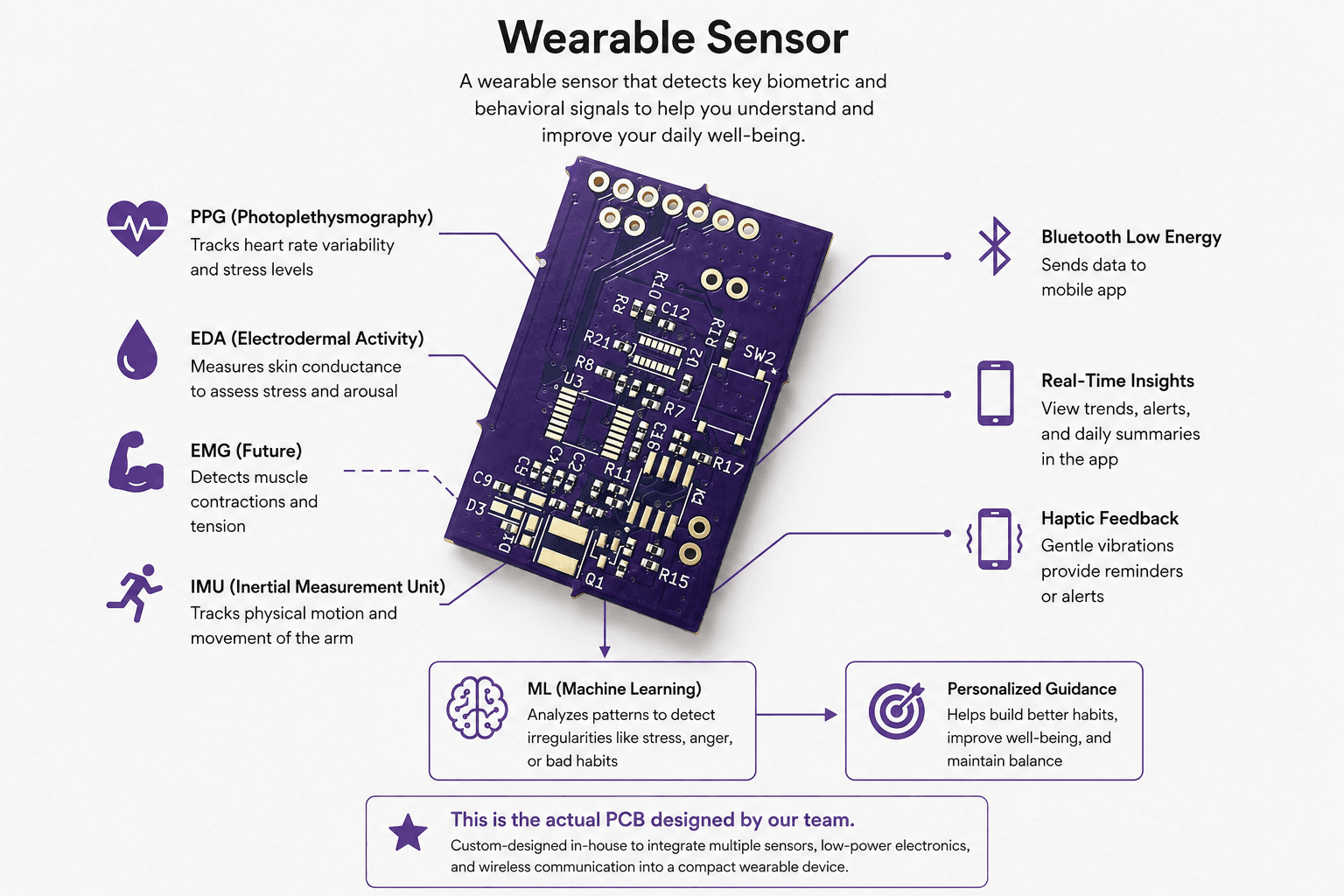
Hardware Development
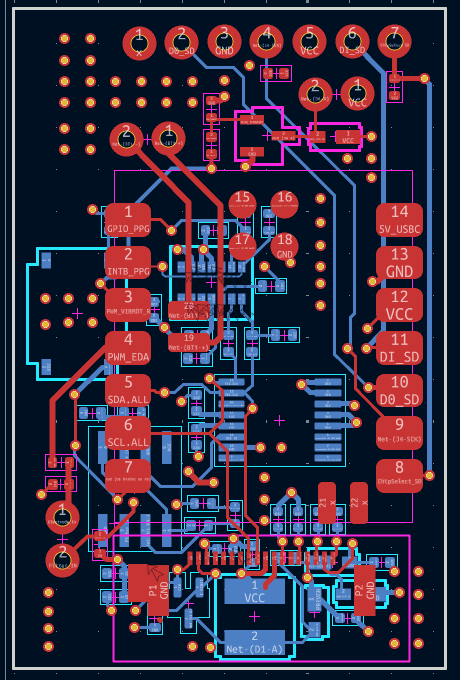
Board Layout
The current PCB layout brings the sensing, processing, communication, and feedback components into a wearable footprint.
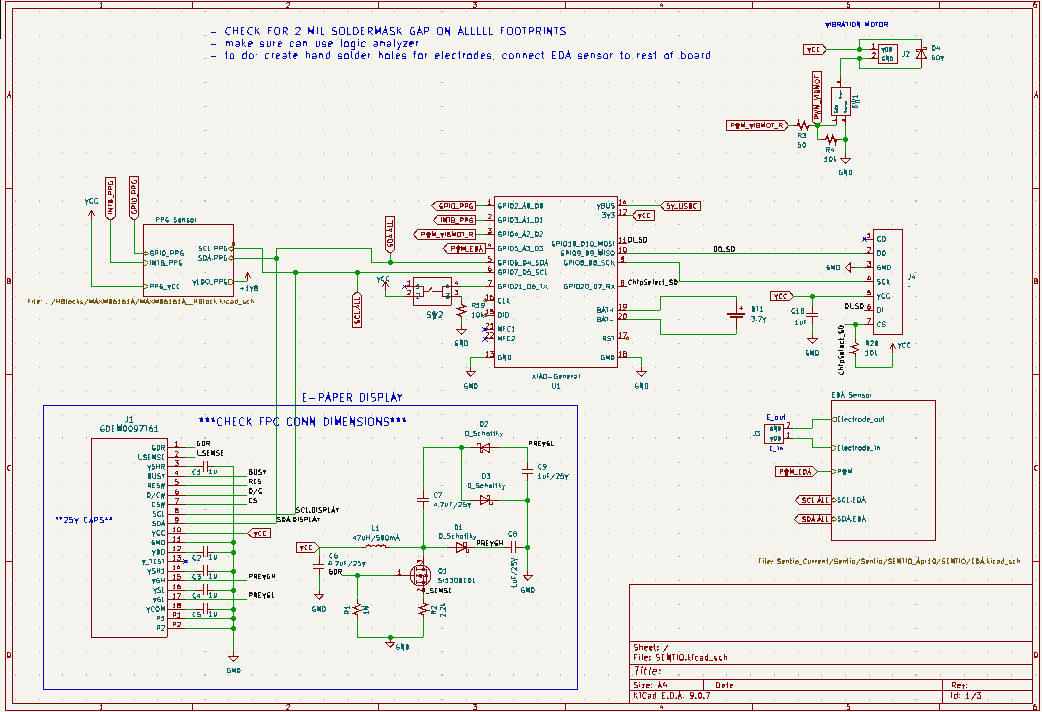
Electrical Schematic
The schematic maps how the individual hardware systems connect before the design is assembled and tested.
Current Focus
Sentio is still in active development. The team is working toward an integrated prototype that can learn useful patterns while keeping feedback timely and unobtrusive.
- Integrated sensing: combine biometric and motion inputs in one wearable.
- Personalized analysis: refine models around each wearer’s baseline.
- Haptic feedback: make prompts subtle, immediate, and useful.
Sentio is intended to support awareness and habit change, not to diagnose a medical or mental health condition.
Interested in Sentio?
We're developing Sentio at the intersection of wearable hardware, machine learning, and human-centered design. Get in touch if you'd like to collaborate or learn more.